The Purposes of Education
Initiative Events
Join us beginning in fall 2026
Through a series of 30 events – including webinars, discussions, classes, and our biennial conference – PLATO’s 30th Anniversary Initiative invites educators, students, and communities to explore one enduring question:
What are the purposes of education — historically, now, and in the decades ahead?
In a rapidly changing global educational landscape—shaped by advances in artificial intelligence, shifting social and economic realities, and evolving expectations of schooling—we will consider how educational policies and systems have developed over time, examine what they are being asked to do today, and imagine how they may continue to evolve in the future.
 Teachers can track all Initiative events attended this year to receive a certificate in June for the total number of professional development hours earned, which can be presented to your school district for professional development credits.
Initiative Events
Opening Webinar: The History and Future of Education
Tuesday September 29, 7-8:30pm ET
The initiative’s opening event will feature four distinguished scholars of education for a conversation about the history and changing purposes of education.
Book For the Year: Not for Profit: Why Democracy Needs the Humanities by Martha Nussbaum
The PLATO community is invited to join three virtual “book group” meetings throughout the year to discuss Martha Nussbaum’s Not for Profit: Why Democracy Needs the Humanities. The yearlong conversation will culminate in a community discussion at PLATO’s June 2027 Conference. The first virtual book group meeting will take place on Tuesday, October 27, 7-8pm ET.
Middle and High School Classes
PLATO’s 2026-27 online philosophy classes examine issues related to the initiative. High school course topics are “Power, Knowledge, and the Purpose of Education” in the fall; “Becoming Someone: Selfhood, Status, and Life After High School” in winter; and “Thinking, Learning, and Authenticity in the Age of AI” in the spring. Middle school courses will explore “Why Go to School?” in the fall; “Personal Identity and Education” in winter; and “What is Worth Learning?” in the spring.
Seminars for Teachers
Three free professional development seminars will offer teachers opportunities to think philosophically about education and their role in shaping it.
Professional Development Materials
Materials for professional development communities, designed for use in any school, will be available on the website this fall.
Philosophy Across the Ages
Our intergenerational series will invite participants of all ages to explore questions such as: What is most valuable about education? What should schools teach?
Winter Webinar: “Why Go to College?”
PLATO’s Graduate/Undergraduate Consortium will host a panel of speakers from a range of post secondary-school institutions to consider the purpose and value of higher education.
Questions: Philosophy for Young People
The theme of the 27th issue of Questions: Philosophy for Young People is “Why go to school?”
PLATO’s 8th Biennial Conference: The Future of Education
Oberlin College (near Cleveland, OH), June 25-26, 2027
As the culminating event of PLATO’s 30th Anniversary Initiative, educators, scholars, and practitioners will gather at Oberlin College to reflect about the future of education.
Opening Webinar
All PLATO webinars are free and open to the public.
The History and Future of Education
Tuesday, September 29, 7-8:30pm ET
The opening event of the 30th Anniversary Initiative will feature four nationally known scholars of education, who will examine the history and future of public education, including the tensions in our understanding of the purposes of education, the rise of credentialing over learning and the decline of the liberal arts, the distinction between public and private education, alternatives to schooling that have emerged over the years, and the possibilities for radical transformation that the rise of AI has the potential to foster.
Teachers can track all Initiative events attended this year to receive a certificate in June for the total number of professional development hours earned, which can be presented to your school district for professional development credits.
PANEL:
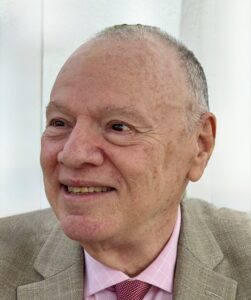 Dr. Jaime Grinberg is Professor of Educational Foundations at Montclair State University. He directed the New Jersey Network for Educational Renewal and chaired the Committee on Standards for the Council of Learned Societies in Education. His Ph.D. is from Michigan State University. Originally from Argentina, he has lectured in many countries, including Uruguay, Israel, Mexico, and Argentina. Grinberg has published numerous books, papers, and chapters. He often comments on Spanish-language TV and radio and has taught globally, including as a Visiting Professor at Kibbutzim College in Israel. He is the co-editor of the academic journal Inquiry: Critical Thinking Across the Disciplines.
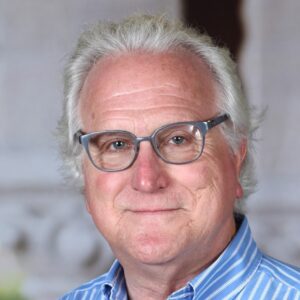 Dr. David Labaree is Lee L. Jacks Professor (emeritus) at the Stanford University Graduate School of Education. His research focuses on the historical sociology of American schooling, exploring issues such as the evolution of U.S. systems of schooling and higher education, the contradictions that drive the dynamics of these systems, and the rise of credentialism. The author of nine books, his most recent is The Emergent Genius of American Higher Education. He blogs at https://davidlabaree.com.
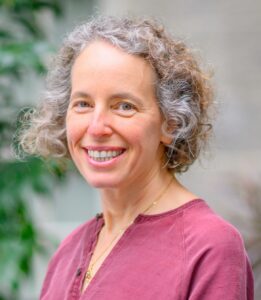 Dr. Meira Levinson is Chen Family Educational Foundations Professor at Stanford University. She is currently working to start a global field of educational ethics that is philosophically rigorous, disciplinarily and experientially inclusive, and both relevant to and informed by educational policy and practice. In doing so, she draws upon scholarship from multiple disciplines as well as her eight years of experience teaching middle school humanities, civics, history, and English in the Atlanta and Boston Public Schools.
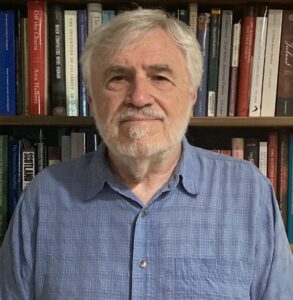 Dr. William J. Reese is the Carl F. Kaestle W.A.R.F. and Vilas Research Professor of Educational Policy Studies and History at the University of Wisconsin-Madison, a member of the National Academy of Education, and a Fellow of the American Educational Research Association. He’s published books on various aspects of the history of American education, and is the author of The Calculating Boy: Zerah Colburn, America’s First Child Celebrity (Johns Hopkins University Press, spring 2027).
Please register using the form on the right (below on mobile).
Book for the Year
PLATO Book For the Year
PLATO will be hosting three virtual book club meetings over the course of the 2026-27 academic year to explore Martha Nussbaum’s book Not for Profit: Why Democracy Needs the Humanities. Each meeting will examine key questions raised by selected chapters.
Teachers can track all Initiative events attended this year to receive a certificate in June for the total number of professional development hours earned, which can be presented to your school district for professional development credits.
Virtual Book Group Meetings: Guided Reading Questions
- Which specific passages spoke most powerfully to you and why?
- What passages arouse your curiosity and leave you eager to discuss with others?
- What passages would you like to discuss and have clarified?
- Are there parts of Nussbaum’s argument that you think don’t work or are no longer relevant?
Chapters 1 – 3: Guiding Questions & Key Passages
- What are the conflicting agendas, as you see them, within education today?
Text: Chapter 1, page 2: “Thirsty for national profit, nations, and their systems of education, are heedlessly discarding skills that are needed to keep democracies alive. If this trend continues, nations all over the world will soon be producing generations of useful machines, rather than complete citizens who can think for themselves, criticize tradition, and understand the significance of another person’s sufferings and achievements.”
- What capacities should we cultivate within individuals in order to meet our educational aims?
Text: Chapter 2, page 18 -19 : “…This [liberal arts] tradition argues that education is not just about the passive assimilation of facts and cultural traditions, but about challenging the mind to become active, competent, and thoughtfully critical in a complex world…Education for economic growth [on the other hand] needs basic skills, literacy, and numeracy. It also needs some people to have more advanced skills in computer science and technology. Equal access, however, is not terribly important…”
- Should we be educating for participatory democracy or economic participation?
Text: Chapter 3, page 45: “[S]chools can and should produce citizens in and for a healthy democracy [by doing the following:]- Develop students’ capacity to see the world from the view-point of other people, particularly those whom their society tends to portray as lesser, as ‘mere objects’
- Teach attitudes toward human weakness and helplessness that suggest that weakness is not shameful and the need for others not unmanly; teach children not to be ashamed of need and incompleteness but to see these as occasions for cooperation and reciprocity
- Develop the capacity for genuine concern for others, both near and distant
- Undermine the tendency to shrink from minorities of various kinds in disgust, thinking of them as ‘lower’ and ‘contaminating’
- Teach real and true things about other groups (racial, religious, and sexual minorities; people with disabilities), so as to counter stereotypes and the disgust that often goes with them
- Promote accountability by treating each child as a responsible agent.”
- Can a school system successfully prioritize technical, vocational, and STEM-based economic skills without undermining “freedom of mind?”
- Is it the case that those educating with an economic goal in mind fear and campaign against teaching the humanities?
Please register using the form on the right (below on mobile).
Seminars for Teachers
Fall Seminar: The Role of the Teacher in Education
Tuesday, October 13, 7-8:30pm ET
In an age of self-directed learning, what is the unique role of the teacher? Is all learning education, or is there something essential that can only happen when students and teachers engage together around a shared task? For students, the focus on skills and assessments can reduce education to an exercise in task-completion and performance. For teachers, the pressures to teach to the test or required curriculum can relegate them to rule-enforcers or arbitrators of ability. How might we reclaim schooling as a space where the full person can exist — where education involves evaluating, questioning, imagining and engaging with the world? What are the unique gifts that teachers offer through their expertise, their attention, and their time with students?
The fall seminar will be taught by PLATO Associate Director Ariel Sykes. Ariel has over fifteen years of experience as a philosophy educator, curriculum designer, and researcher dedicated to inquiry based teaching practices, and has worked in a variety of K-12 educational contexts as both teacher, trainer and administrator. She has also taught philosophy and educational foundations classes across several colleges as well as participates in federally funded research projects that explore dialogue facilitation, argument literacy and educational technology. Ariel holds an M.A. in Philosophy and Education from Teachers College, Columbia University, and a B.A. from Mount Holyoke College.
Teachers can track all Initiative events attended this year to receive a certificate in June for the total number of professional development hours earned, which can be presented to your school district for professional development credits.
The seminars for teachers are free events. Please register for the fall seminar using the form on the right (below on mobile).
Winter Seminar: Curiosity and Inquiry
Tuesday, February 23, 7-8:30pm ET
What should be the role of curiosity in education? Do our current educational paradigms discourage curiosity and wonder? For students, a side effect of learning to excel in school can be a dampening of curiosity and intellectual excitement; for teachers, the pressure to prioritize rigor and productivity can impede the desire to follow the unexpected directions in which student curiosity might lead. How might we rethink rigor and academic accomplishment so that they include questioning, wondering, and curiosity, while still working within systems that provide standards and accountability?
Reading: Susan Engel (2011), “Children’s Need to Know: Curiosity in Schools,” Harvard Educational Review 81:4. (article will be sent to registered seminar participants)
The winter seminar will be taught by PLATO Executive Director Dr. Jana Mohr Lone. Jana is an Affiliate Associate Professor in philosophy at the University of Washington, and is the author of the books Seen and Not Heard (2021) and The Philosophical Child (2012); co-author of Philosophy in Education: Questioning and Dialogue in Schools (2016); co-editor of Philosophy and Education: Introducing Philosophy to Young People (2012); author of many articles about philosophy with young people; and author of a series of six picture books, What Would You Do? (2024), about moral issues facing children. Jana has been leading philosophy sessions with students from preschool to graduate school for more than 30 years.
Spring Seminar: Inquiry in the Age of AI
Tuesday, April 13, 7-8:30pm ET
While AI embeds itself into more and more aspects of our lives, it is still new enough that its effects are only able to be speculated about, although some of the newest research being done is concerning. How is AI changing the nature of inquiry? Can AI be utilized without resulting in negative effects on human inquiry and dialogue? How does AI affect our intellectual, moral, and epistemic virtues? Should schools, teachers, and institutions develop practices that reward these virtues, avoiding what C. Thi Nguyen calls “value capture,” a situation where personal values get replaced by simplified, quantified metrics?
The spring seminar will be taught by Stephen Kekoa Miller. Stephen is PLATO’s Board President and is the chair of the Humanities Department at Oakwood Friends School and Adjunct Professor of Philosophy at Marist College. He has taught philosophy for the past 25 years in Poughkeepsie NY. Stephen has developed a wide range of courses from middle-school philosophy through upper-level college courses, and a philosophy series for parents and community members. Stephen also served as the Chair of the APA’s Committee on Pre-College Philosophy for three years and served on the Teachers Advisory Council of the National Humanities Center and the Ethics Board of the Town of Poughkeepsie. He is the editor of Intentional Disruptions (Vernon, 2021).