Jana Mohr Lone

Love, Z

Last week I read the story Love, Z by Jessie Sima with a group of 9-11 year olds. The story is about a young robot, Z, who finds a bottle with a message inside that is indecipherable except for two words: “Love, Beatrice.” Z wonders what love means. The robot asks all the other robots, but Love, Z

Seen and Not Heard

Last month saw the release of my new book Seen and Not Heard: Why Children’s Voices Matter. The book describes and analyzes conversations I have had with children over the past 25 years about their philosophical questions and ideas.  Here is an excerpt:   In the following conversation about the ethics of attending friends’ birthday parties, some Seen and Not Heard

HIgh School Ethics Bowl

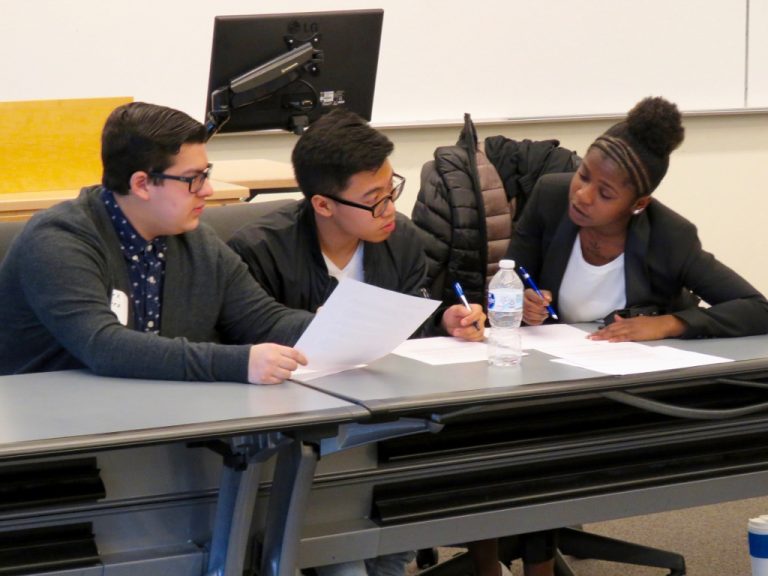
Since 2014, the University of Washington Center for Philosophy for Children has organized and run the Washington State High School Ethics Bowl. Modeled after the Intercollegiate Ethics Bowl, the High School Ethics Bowl involves teams of students analyzing a series of wide-ranging ethical dilemmas. The competition utilizes case studies relevant to youth, such as questions about HIgh School Ethics Bowl

Hope

This year the journal Questions: Philosophy for Young People, which I founded 20 years ago and which has become one of the official journals of the organization PLATO (Philosophy Learning and Teaching Organization), publishes the philosophical work of young people. The theme of the 2021 issue is hope. I recently met with a group of fifth Hope

Click, Clack, Moo Cows That Type

My colleague Karen Emmerman, the Center for Philosophy for Children’s Education Director, has contributed this guest post: Doreen Cronin’s book Click, Clack, Moo Cows That Type is one of my favorite books to use in philosophy for children sessions. It lends itself to many different sorts of wondering.   In the book, animals on a farm acquire Click, Clack, Moo Cows That Type

What’s Your Reason?

Recently I played the game “What’s Your Reason” in a virtual philosophy session with a group of eight- and nine-year-old children. The game was created by my colleague David Shapiro, and I have adapted it for a virtual setting.  In the classroom game, we hand out (depending on the students’ ages) two to four note What’s Your Reason?