philosophy for children

Let’s Do Nothing!

Let’s Do Nothing by Toby Fucile illustrates the perplexity of the concept of nothing. The book tells the story of two boys who, after concluding that they have “done it all,” decide to do nothing. The trouble is that doing nothing is not easy. If you blink, you’re not doing nothing. If you open your Let’s Do Nothing!

The Hole

In The Hole by Øyvind Torseter, a man is moving into a new home, and he notices a hole in the apartment. The hole seems to move around, appearing in a wall, on the floor, in a door, etc. The man makes a phone call, saying, “I’ve found a hole . . . in my apartment . . . The Hole

Black Dog

Levi Pinfold’s Black Dog tells the story of a black dog that arrives outside a family’s home one morning. The father in the family wakes up first and calls the police, reporting that, “There’s a black dog the size of a tiger outside my house!” The police officer tells him not to go outside. The mother Black Dog

I Am the Dog

Daniel Manus Pinkwater’s I Am the Dog tells the story of Jacob, a boy, and his dog Max. One day they decide to change places. Jacob eats from a bowl on the floor while Max eats at the table with the family. Jacob runs around the yard while Max goes to school. Max does homework while I Am the Dog

The Favorite Daughter

Allen Say’s picture book The Favorite Daughter is dedicated to his daughter. It’s the story of Yuriko, who is half Japanese. She is upset when other children make fun of her name and tease her about a photo of her wearing a kimono because she has blond hair. Her art teacher mispronounces her name, calling The Favorite Daughter

I Wonder

Annaka Harris has written a picture book, I Wonder, that expresses the feelings of wonder and mystery that many children have when thinking about the world. Eva, walking with her mother, asks questions like: Where does gravity come from? How many grains of sand are in the world? What was here before the beginning of I Wonder

Picture Books and Aesthetics

I write a lot about picture books and the role they can play in encouraging children to develop their philosophical thinking. I’ve been thinking about the special role of picture books for inspiring inquiry about aesthetics. Picture books are a unique mixture of literature and visual art, and generate the discovery of meaning through a Picture Books and Aesthetics

I’m a Frog!

I’m a Frog is another gem of a picture book by Mo Willems, published this year. It’s one of a series of books about best friends Piggie and Elephant Gerald. Willems’ books are clever and thoughtful, and frequently philosophically provocative. In I’m a Frog, Piggie tells Gerald that she is a frog. Gerald perplexed, responds, “I I’m a Frog!

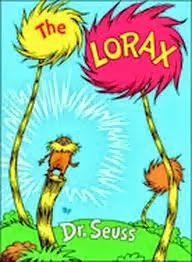
The Lorax

A plug for the philosophical suggestiveness of books by Dr. Suess! And for entering a philosophy session not knowing where it will lead. Today I read the story The Lorax, published in 1971, with a second grade class. In the story, the Once-ler describes how he arrived in a town full of Truffula Trees, with their The Lorax

Good News, Bad News

Jeff Mack’s book Good News Bad News portrays the different ways people can see the same situation. Using just four words – good news, bad news – Mack describes Rabbit and Mouse going on a picnic. Good news: they’re going on a picnic. Bad news: it starts to rain. Good news: Rabbit has an umbrella. Good News, Bad News