Area: Epistemology

Measuring with Accuracy and Precision
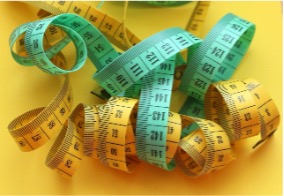
Key Definitions  Introduce two measurement concepts and write the definitions on the board.  Sorting Objects  Creating Criteria What do all the examples in each category have in common?  Meta-Reflection How did this activity go?  Ask students:  Or, instead of the whole activity or just the concluding meta-reflection, you can conduct a Community of Inquiry using Measuring with Accuracy and Precision

Causation with Frog and Toad

This lesson plan can be used on its own or as an accompaniment to the Arnold Lobel Frog and Toad story, “The Garden.” Divide students into groups of 3-4. Ask each group to come up with 2-3 examples of the following three cases: See Discussion Questions tab for discussion prompts.

Reality Scavenger Hunt

Activity Description: Break the students into groups of three. Put the following list on the board and ask each group to come up with at least one thing that fits each category. Something that isn’t real but seems to be real Something that is real but seems not to be real Something you can’t tell Reality Scavenger Hunt

Dream Activity

Part 1: Have each person think of a dream they’ve had recently. After giving them a moment to think, go around in a circle and have each person share a bit about their dream. (Elementary school students may get exceptionally excited about sharing their dreams and may want to share an enormous amount of detail Dream Activity

Belief and Knowledge

Have each person write down on a piece of paper: Once everyone has their statements, then have them pair up to talk about their claims, and why they put them in the category they did. This should get them started on a conversation about the difference between belief and knowledge. Then have the group come Belief and Knowledge

Noises in the Night

A NOTE FOR TEACHERS: I’m interested in helping young people think skeptically and philosophically about concepts like knowledge, belief, evidence, fact, and theory. I developed the Vinland Map exercise for this purpose for older students and then wrote Noises in the Night as a way of starting similar conversations with younger age groups. The Lesson: Noises in the Night

The Vinland Map Exercise

I developed this exercise in a series of Critical Thinking and Philosophy of Science classes. It can raise a huge range of issues about knowledge; testing and confirmation bias; skepticism and how not to be gullible; the relationship between scientific and historical and common sense thinking; the relationship between key concepts like fact, belief, theory, The Vinland Map Exercise

What is Knowledge?

The full lesson plan is available as a PDF in the Lesson Attachment area above. Our whole education is organized around “buckets” of knowledge: “2+2 = 4” (math bucket); “Hydrogen is an element but water isn’t” (chemistry bucket); “Abraham Lincoln was born in 1809” (history bucket). But philosophy (and especially epistemology, the study of knowledge) What is Knowledge?

Do You Know You Have Hands?

Hands painted in multi colors

Philosophers question what others take for granted. Asking young people whether they know they have hands (or feet, eyes, or ears) can be a wonderful way to have fun while practicing careful thinking. Start by asking “Do you know you have hands?” If the child responds, “Of course I know I have hands!” you can Do You Know You Have Hands?