
We Are in a Book!
Jana Mohr Lone is PLATO’s Executive Director.
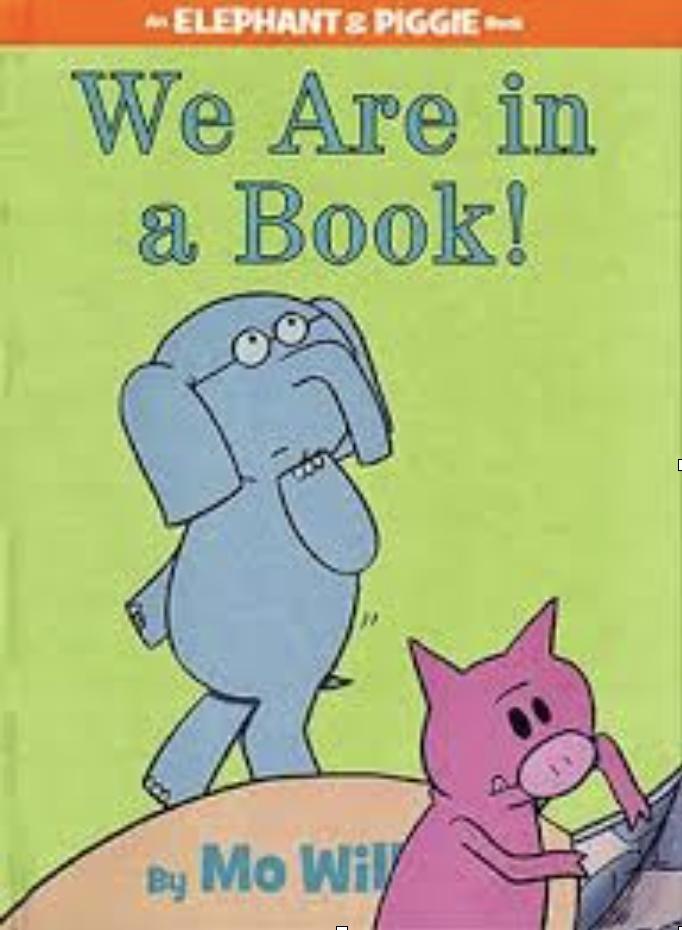
“The age of five is the most philosophical age you can be.”
– Mo Willems
Mo Willems’ We Are in a Book! raises in a playful way some of the deepest questions of epistemology and metaphysics, including questions about reality, identity, knowledge, the relationship between the mind and the body, and death. The story begins when Willems’ beloved characters Elephant and Piggie sense that someone is looking at them. Is it a monster? No, it’s a . . .
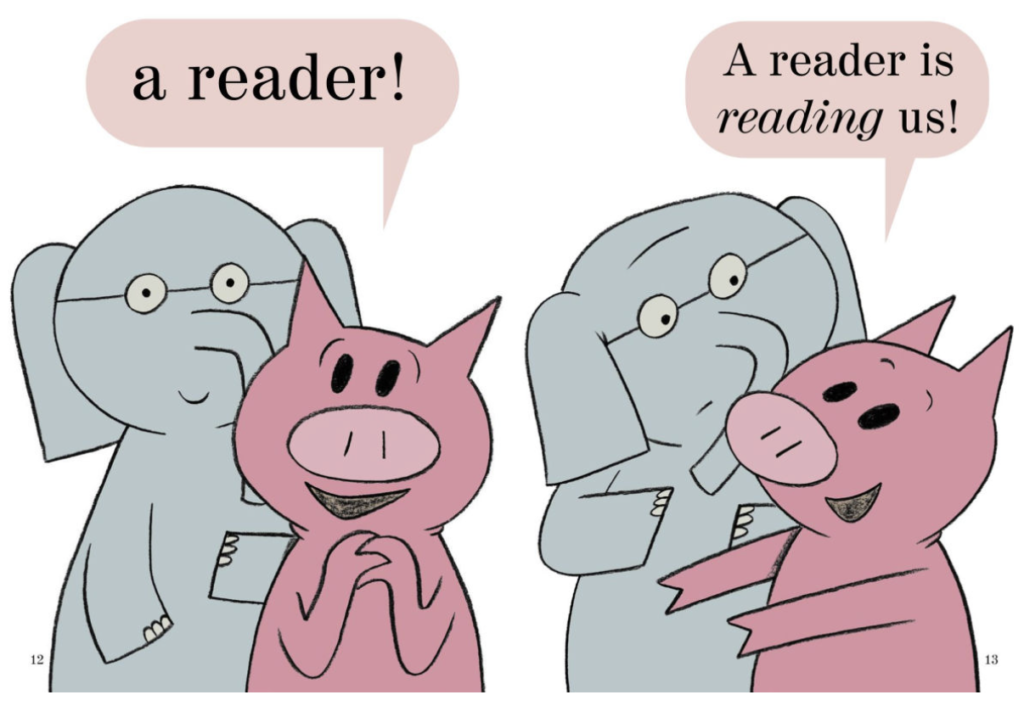
They are in a book, they realize. How exciting! Piggie points out that being in a book means that they can, for example, make the reader say “banana” if the reader reads it aloud. This works!
Piggie suggests that Elephant take a turn before the book ends. Elephant is taken aback. “The book ends?!”
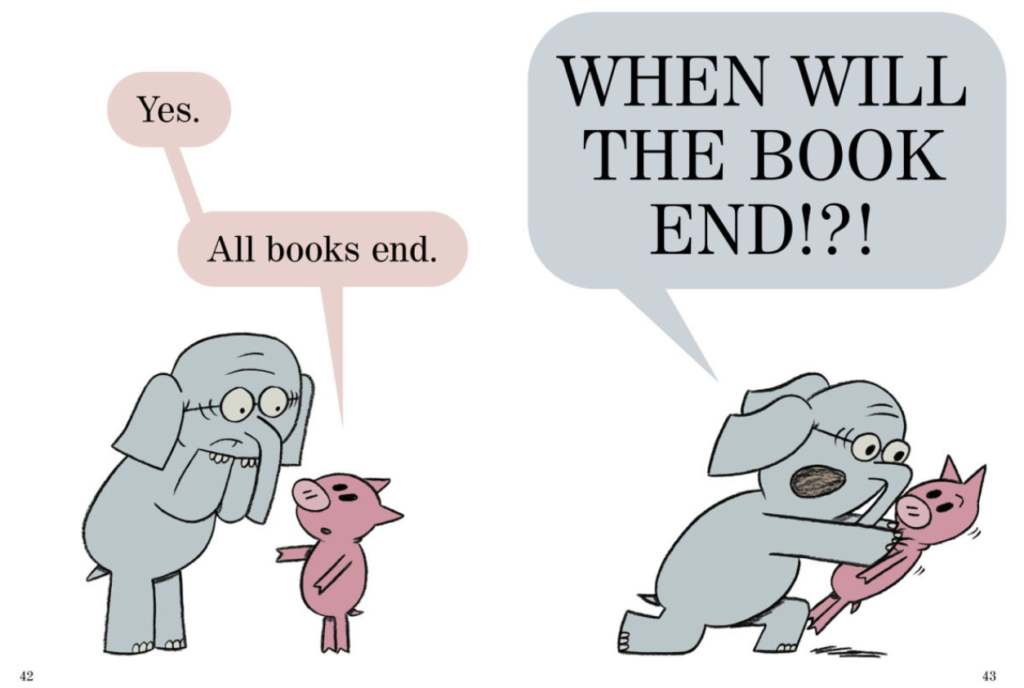
Elephant is shaken by the knowledge that there will be an end to the book and, as the pages go by, protests that the book is going too fast: “I have more to give!” Then Piggie has an idea: they can just ask the reader to read the book again.
I read the story with a group of third grade students last spring, after doing philosophy with them each week all year. I asked them to think about the philosophical questions about which the story led them to wonder. They came up with eight questions.
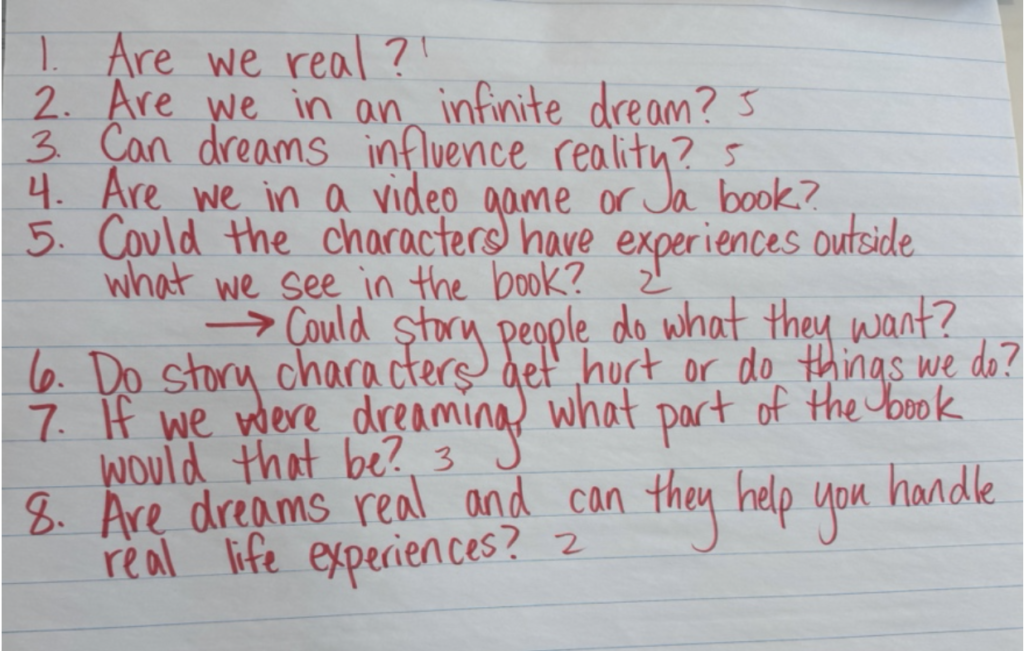
We spent most of the class talking about whether we could be in an “infinite dream.” Could we be in a dream? If life is an infinite dream, would that matter? What would be different from the way life feels to us now?
We discussed whether it might be possible that we could be characters in a book (or in a video game or simulation, or in the mind of God). How can we know we are or are not book characters? Would it be possible, if we were, to experience consciousness? What is consciousness?
The book can also lead to discussions about the nature of death. Elephant is thrown into a state of anxiety upon the realization that the book will end. He is not ready for it to be over. Why does life end and people die? If we could live our lives over again, would we? If so, how many times? Would we choose to live forever if we could? What does death mean for how we live our lives? What do we think happens when people die? Could we continue to exist in some form after death?
Questions about death and reality can lead to thinking about the relationship between the mind and the body. Are we our bodies, our minds, or our brains? What is the difference, if any, between the brain and the mind? Do our bodies control our minds, or do our minds control our bodies? Could our minds exist without our bodies?
The gap between appearance and reality is another topic raised by the story. Do we experience the real world or just our perceptions of it? Are our perceptions an accurate depiction of reality? What is the role of reason in understanding reality? Can we have knowledge of a reality independent of our perceptions? Are appearances illusions or are they a way to access reality? What does reality mean? What does it mean to be real? If we were book characters, would that make us less “real” than we believe ourselves to be now?
Many philosophers consider metaphysics and epistemology to engage the most fundamental questions of philosophy. In Some Problems of Philosophy, William James described metaphysics as “the discussion of various obscure, abstract, and universal questions which the sciences and life in general suggest but do not solve.” We Are in a Book! is a wonderful resource for inspiring discussions about some of these questions, which also tend to be among the most pressing philosophical issues for children.

