
The Purposes of Education
Initiative Events
Join us beginning in fall 2026
Through a series of 30 events – including webinars, discussions, classes, and our biennial conference – PLATO’s 30th Anniversary Initiative invites educators, students, and communities to explore one enduring question:
What are the purposes of education — historically, now, and in the decades ahead?
In a rapidly changing global educational landscape—shaped by advances in artificial intelligence, shifting social and economic realities, and evolving expectations of schooling—PLATO supports and encourages reflection. Together, we consider how educational policies and systems have developed over time, examine what they are being asked to do today, and imagine how they may continue to evolve in the future.
Teachers have the option to track all the Initiative events you attend this year and will receive a certificate in June for the total number of professional development hours earned, which can be presented to your school district for professional development credits.
Initiative Events
Opening Webinar: The History and Future of Education
Tuesday September 29, 7-8:30pm ET
The initiative’s opening event will feature four distinguished scholars of education for a conversation about the history and changing purposes of education.
Book For the Year: Not for Profit: Why Democracy Needs the Humanities by Martha Nussbaum
The PLATO community is invited to join three virtual “book group” meetings throughout the year to discuss Martha Nussbaum’s Not for Profit: Why Democracy Needs the Humanities. The yearlong conversation will culminate in a community discussion at PLATO’s June 2027 Conference.
Middle and High School Classes
PLATO’s 2026-27 online philosophy classes examine issues related to the initiative. High school course topics are “Power, Knowledge, and the Purpose of Education” in the fall; “Becoming Someone: Selfhood, Status, and Life After High School” in winter; and “Thinking, Learning, and Authenticity in the Age of AI” in the spring. Middle school courses will explore “Why Go to School?” in the fall; “Personal Identity and Education” in winter; and “What is Worth Learning?” in the spring.
Seminars for Teachers
Three free professional development seminars will offer teachers opportunities to think philosophically about education and their role in shaping it.
Professional Development Materials
Materials for professional development communities, designed for use in any school, will be available on the website this fall.
Philosophy Across the Ages
Our intergenerational series will invite participants of all ages to explore questions such as: What is most valuable about education? What should schools teach?
Winter Webinar: “Why Go to College?”
PLATO’s Graduate/Undergraduate Consortium will host a panel of speakers from a range of post secondary-school institutions to consider the purpose and value of higher education.
Questions: Philosophy for Young People
The theme of the 27th issue of Questions: Philosophy for Young People is “Why go to school?”
PLATO’s 8th Biennial Conference: The Future of Education
Oberlin College (near Cleveland, OH), June 25-26, 2027
As the culminating event of PLATO’s 30th Anniversary Initiative, educators, scholars, and practitioners will gather at Oberlin College to reflect about the future of education.
Opening Webinar
All PLATO webinars are free and open to the public.
The History and Future of Education
Tuesday, September 29, 7-8:30pm ET
The opening event of the 30th Anniversary Initiative will feature four nationally known scholars of education, who will examine the history and future of public education, including the tensions in our understanding of the purposes of education, the rise of credentialing over learning and the decline of the liberal arts, the distinction between public and private education, alternatives to schooling that have emerged over the years, and the possibilities for radical transformation that the rise of AI has the potential to foster.
PANEL:
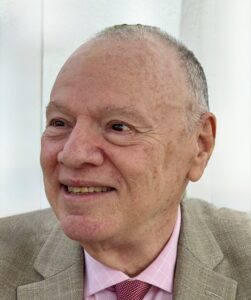 Dr. Jaime Grinberg is Professor of Educational Foundations at Montclair State University. He directed the New Jersey Network for Educational Renewal and chaired the Committee on Standards for the Council of Learned Societies in Education. His Ph.D. is from Michigan State University. Originally from Argentina, he has lectured in many countries, including Uruguay, Israel, Mexico, and Argentina. Grinberg has published numerous books, papers, and chapters. He often comments on Spanish-language TV and radio and has taught globally, including as a Visiting Professor at Kibbutzim College in Israel. He is the co-editor of the academic journal Inquiry: Critical Thinking Across the Disciplines.
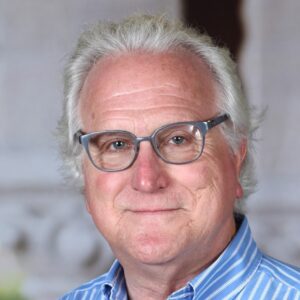 Dr. David Labaree is Lee L. Jacks Professor (emeritus) at the Stanford University Graduate School of Education. His research focuses on the historical sociology of American schooling, exploring issues such as the evolution of U.S. systems of schooling and higher education, the contradictions that drive the dynamics of these systems, and the rise of credentialism. The author of nine books, his most recent is The Emergent Genius of American Higher Education. He blogs at https://davidlabaree.com.
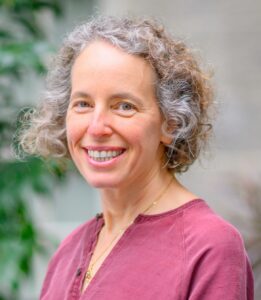 Dr. Meira Levinson is Chen Family Educational Foundations Professor at Stanford University. She is currently working to start a global field of educational ethics that is philosophically rigorous, disciplinarily and experientially inclusive, and both relevant to and informed by educational policy and practice. In doing so, she draws upon scholarship from multiple disciplines as well as her eight years of experience teaching middle school humanities, civics, history, and English in the Atlanta and Boston Public Schools.
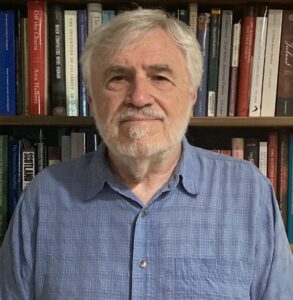 Dr. William J. Reese is the Carl F. Kaestle W.A.R.F. and Vilas Research Professor of Educational Policy Studies and History at the University of Wisconsin-Madison, a member of the National Academy of Education, and a Fellow of the American Educational Research Association. He’s published books on various aspects of the history of American education, and is the author of The Calculating Boy: Zerah Colburn, America’s First Child Celebrity (Johns Hopkins University Press, spring 2027).


Connect With Us!